Friday, 8 May 2015

Institutional Research

 A thriller provides the sudden rush of excitement and exhilaration. It keeps the audience on the edge of their seats as the plot builds towards a climax. Always in Thrillers it will include factors such as plot twists and cliffhangers. A Thriller is usually a villian driven plot where there are obstacles put in place for the protagonist to overcome. Thrillers are placed 5th on the list for the most popular movie genres. The top 3 most successful Thriller movies of all time are "The Dark Knight Rises" (2012), "Jurassic Park" (1993) and "American Sniper" (2014). 


 Looking at the table the total gross for Thriller/Suspense it is of 12 billion dollars. This obviously means that it is a successful genre but if you compare it to comedy which is at first there is a difference of 28 billion dollars in total gross, which is much higher.


Advanced analysis: film title

Shutter Island 


Teddy Daniels is a U.S. marshal and is assigned to investigate the disappearance of a patient in Ashecliffe Hospital. Teddy starts to think that he was brought there as part of a twisted plot by hospital doctors which range from illegal to sinsiter treatments. In the end it is revealed that Teddy is actually a delusional mental patient in the hospital. He murdered his crazy wife Dolores after she drowned their three children. He had been a pation for two years at the hospital, the doctors had tried an expirement on him by allowing him to live the fanatsy he believes. The last sentense he say is "which would be worse to live as a monster or die a good man". In my opinion Teddy at the end really did undertsand what happened and would prefer to be lobotomized and forget everything then live the rest of his life feeling guilty.

Shutter Island conforms to the codes and conventions of the Thriller genre. Throughout the film the use of quick shots makes the feeling of suspense and tension more noticeable and creates disorientation of time and space. Alslo, it conforms to the codes and conventions with the use of non-diegetic sound which creates tension. This tension in the music is generally in Thriller films and it adds to the suspense as it gradually gets faster and louder until the climax where there is a loud sound and then the sudden stop which makes you think that something is going to happen. An example is when Teddy goes to Ward C because there was an outbreak from the patients, the music starts to get faster and louder, then a patient jumps out of no where. Another point is that all the scenes are filmed in a dark manner. The use of low key lighting creates a sense of fear which gets the audience more involved and also sets the mood of how the film is.

In this film there are so many twists and mis-directions. An example of mis-direction is at first we think that Teddy is only at  Ashecliff to solve the mystery of Rachel Solando, but then as the story evolves we think that this place is evil and that the doctors are doing experiments on the patients. An example of the twists are when Teddy really realises that he is a patient and the doctors were just allowing him to live his fantasy as part of their experiment. This is a major twist that i did not expect and I don't think many other viewers would either.


Reclaim production schedule final

Editing

Editing is one of the most important factors of in a film or T.V show because it creates meaning for the viewers. Editing is used by the producers to make it hard for the audiences to notice it.

The two main main editing styles are:
-Continuity
-Montage


Continuity

Continuity editing is used for the viewers not to notice any change so invisible editing.  This allows the suspension of disbelief to occur.

There are always two rules applied to continuity editing:
-The 180 degree rule
-The 30 degree rule


180 degree rule


The 180 degree rule is used to keep the viewer focused and to avoid the viewer getting. This enables to show continuity. The camera has to be positioned on the same side as the imaginary line for the rule to work and it should be drawn perpendicular to the camera's shot.


This is a video that shows an example of the 180 degree rule. The use from this clip shows the conversation and makes it easier for the viewers to understand and stay focused with what is happening.


Breaking the rule

When breaking the rule the rule this will cause confusion to the viewers, less concentration on important parts and misunderstanding of what is going on. This is why Producers should never decide to break the rule.


 30 degree rule

The 30 degree rule is used in order to create continuity between different shots. For this to work it can be moved to a minimum of 30 degrees and to a maximum of 180 degrees and this will avoid jump cuts from occurring .


Motivated cuts


There are four types of cuts that are motivated by on screen action:
-Shot Reverse Shot 
-Eyeline Match
-Macth On Action
-Graphic Match


Shot Reverse Shot

Shot Reverse Shot is used generally when a conversation occurs. The shot would be either when a character is talking or being talked to, reverse would be also either when a character is talking or being talked to and the shot would be when it cuts back to the original shot.


Semiotics Explained


 Semiotics


The theory of signs from the greek semeiotikos wich means an "an interpreter of signs". Signing is vital to the human existance because it underlines all forms of communication. Within semiotics, anything that is used for human communication is defined as a sign gestures facial expressions etc...


This sign is a representation of a skull on a cross. It suggests a few meanings:
-Death
-Pirates
-Toxicisty
-Danger

Denotation 

What an image actually shows and is immediately apparent, as opposed to the assumptions an individual reader may make about it.

 Conotation

The meaning of a sign that is arrived at through cultural experiences a reader brings to it.


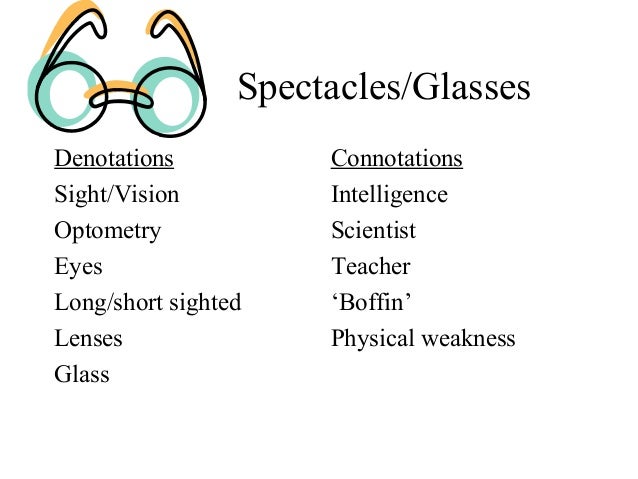
Examples of denotations and conotations of glasses

The signifier
The object itself.


The signified

The meaning conveyed by the signifier.

Example of the signifier and the signified


The signifier is the printed image and the signified is the meaning of the image.

Codes 

A common theme within the genre of a film.


Todorov's and Propp's theory applied to a film that hasen't come out yet


From this trailer of Tomorrowland we can already clearly see Todorov's and Propp's theory applied. Todorov's theory applied to this film would be first the equilibrium, this is where it is the start of the story and everything is normal. The second part would be the disruption, this would occur when the protaganist finds the pin which takes her to another world. The third part would be the realisation, this would be when she realises that the other world was created by people to save the world. The fourth part would be where the order is restored, we can guess this is where she defeats the bad guys and saves the world. The final part would be the new equilibrium, where the protagonist has solved the problem and goes back to her normal life. Propp's character types would be that the protagonist will be the hero, meaning that she will have to get past obstacles in order to save the world. The villian will be the character that opose's the hero's quest, meaning that he will try and stop the protagonist from saving the world. The helper, will be the character to aide the protagonist, meaning that he will help save the world and defeat the bad guys.

Genre Explained

Genre

 Media products can be put into categories or genre. They appear in things such as film and television. A genre has a common set of distinguishing features which are codes and conventions. These features will be found in for example lighting or music. Audiences will always recognise these features in films and it helps them to understand more what is happening.  Genre is also usfel for Produces because they can use it to target a specific audience for example. It is also useful for audiences because it will enable them to know what movies they want to see. However genre changes all the time and this will result in hybrids and the changing of codes and conventions, this could confuse the viewers because it is not what they expected for example in film.


Conventions

Conventions are the widley recognised way of doing something. They are in any type of media, for example the use of good critic reviews on a movie poster. 


Codes

 Codes are signs which create meaning.  
They can be seperated into two categories:
- Technical
- Symbolic 
Technical codes are the ways in which equipment is used to tell a story, for example the lighting in a film.
Symbolic codes show what is under the surface of what we see, for example the non diegetic sound will show you how the character is feeling. Some codes can fit in both categories: music for example is both technical and symbolic.


Sub-Genre 

Sub-Genre are overall groups of media that share similar conventions. An example The sub-genre of animation would be hand drawn or computer generated animation.


 Hybrids 

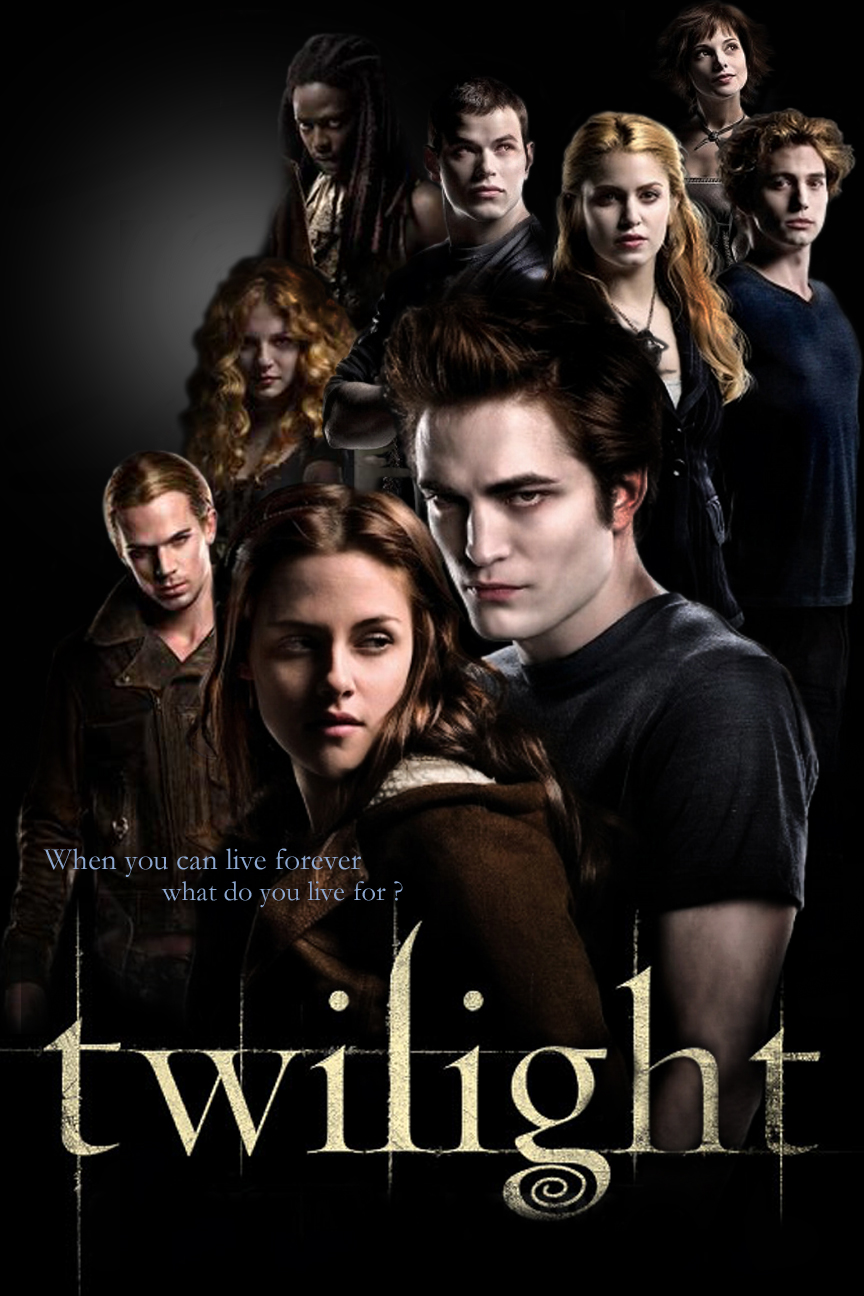
 Hybrids are the putting together of different genres. Horror movies are predominantly the main genre which people of general ages enjoy the most. An example is Twilight which is a mixture of horror and romance.

Iconography 

Iconography is the interpretation of images. For example in the genre film of horror there will always be the repetition of ghosts and dark lighting.